One circle: Entering the AWARË musical experience
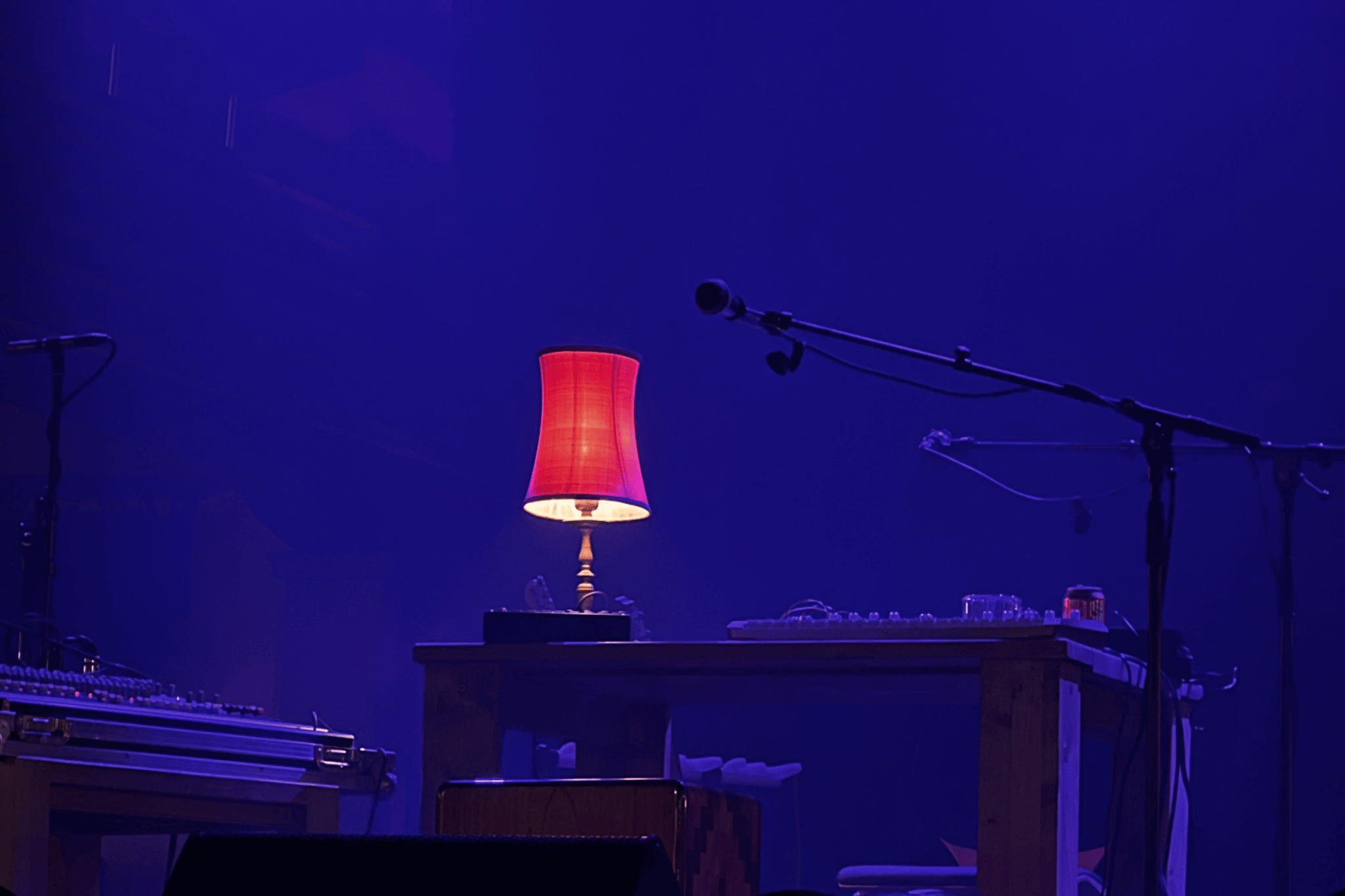
The evening began with the excitement of arriving at a dimly lit concert hall. The space, not yet settled, first resembled a temporary arrangement of strangers, who had not yet agreed to the terms of being together.
There is always that moment before any musical performance, when people still belong to themselves and not yet to the shared pulse of a place.
As soon as I entered, I had the impression that nothing there was fixed in advance, that everything depended on what was going to unfold.
It was the concert of AWARË, a meditative music project co-founded by multi-instrumentalist Bogdan Djukic and Matias de Via. Their music blends spirituality, ethereal sounds, ritual aesthetics, and immersive ceremonial gathering, with the intent to invite the audience to become co-creators of every musical piece.
I wished a close friend could have been there with me, someone I deeply love and wanted to share this beautiful experience with. The second ticket was meant for her. But even though it hasn’t aligned this time, I believe there will be another moment where we share it fully.
The empowering reciprocity of the circle
While being in the concert hall, I could instantly feel the absence of the usual architecture of performance. There was no hierarchy or traditional elevated stage creating distance. Instead, I saw an island in the middle resembling a living room with no walls. It was ambient, simple, and a little disarming in its completeness, as though someone had corrected a design mistake of how the stage should be assembled.
The circle made it obvious that no one was meant to be outside anything, as there was no outside. The usual separation between the performer and the audience was absent. We all had only variation in proximity to the same unfolding.
Bogdan and Mathias were inside the audience. They seemed less like musicians delivering compositions and more like participants in a shared experience.
When the presence is arranged in a circle, the energy can move freely in every direction. Their music moved like a current between people. You could feel it bouncing, reflecting, returning, and evolving.
Such reciprocity in a circle is empowering.
Performance that you enter
AWARË’s musical journey wove live instruments, layered rhythms, meditative vocals, and gradual rhythmic build-ups into ecstatic release.
The sound itself moved like a living organism. It rose, receded, gathered again, and then slowly evolved into dance, catharsis, and celebration. Percussion felt ceremonial and strings carried something almost palpable in their strain.
There was something ancient in the way their music held space. A kind of wisdom that comes from resonance and feeling what is being discovered in the moment.
It felt as if the entire circle was breathing together, in a broader emotional rhythm. The kind that emerges when people agree, without agreement, to stay open. It was spiritual without any insistence or framing beyond what the sound already carried.
Vocal intuition
One of the most distinctive aspects of AWARË's musical journey was the vocals. People often assume they’re singing in some ancient or foreign language, but it wasn’t an actual language. It felt closer to something pre-verbal and instinctive. The absence of language removed interpretation on my side and it shifted the experience away from analysis into total sensation and direct feeling.
Indeed, the language would feel like a limitation in such a setting, as if you would put yourself in a structure.
The connection with their music was on a different level: more energetic than contextual. They were creating their own vocals no one could interpret, but feel. Since we are all going through different processes in our lives, everyone received their own message. As though their music was less a message than a mirror with no fixed reflection.
If you’re going to interrupt silence, it should be worth it
Bogdan and Matias intentionally merge sound and stillness, inviting listeners into a deeply grounded space of connection.
There were intervals between the pieces and the final meditative silence to feel presence without form. When sound re-entered space afterwards, it resonated even deeper.
It reminded me that not every moment needs to be filled. There is a frequency in silence that feels complete, as it holds everything.
Improvisation as surrender
A key element of the performance was improvisation. They had great confidence in how it unfolded. It was trust in the message, in yourself, and in the person you are co-creating with.
At times Bogdan and Matias looked at one another as if listening through sight. The exchange between them was conversation without words.
Those exchanges became the foundation of everything else. It was a reflection shared between people willing to be present without masks. They trusted each other so much. You could sense that what they were doing required a willingness sometimes to not know what comes next and still continue.
Their music was responsive to the room, the room was responsive to their music. It became a loop of attention and creation, and something collective was being built in real time.
To be fully seen without trying to shape what’s seen
What was most striking was the absence of performance in the conventional sense. There was no attempt to present something flawless. Instead, there were two souls co-creating music with the audience, with a willingness to stay vulnerable.
This openness extended to imperfection. There were edges, hesitations, stretches, moments that might have been elsewhere avoided. Yet they remained, and in that remaining they contributed to a sense of honesty that could not have been achieved otherwise.
That vulnerability became part of the connection. As if I see you, and you see me. We surrender, and everything happens.
Space of reflection
Overall, it was an energetic exchange where everyone in the circle contributed. There were no 'them' and 'us', only movement, sound, and a shared feeling. As if the usual sense of self became lighter and less defined. You stopped performing your identity and started experiencing presence.
It felt like remembering that we are human together and, when aligned, we can create something in unity that could not exist alone.
As the performance was ending, they made a gradual reduction in intensity of the music. People began to reassemble their ordinary selves slowly, carefully, as if not wanting to break what had been briefly held in common.
What stayed with me most was the feeling of being held energetically. The music created a container where everything was allowed to exist. Stillness, intensity, joy, uncertainty, all of it had space.
A moment outside normal time
Walking out the concert hall, the city felt slightly altered, though of course it had not changed. What had changed was the inner state. The sense that life is usually more separate than it actually is had been interrupted.
Later, what remained was a kind of pleasant residue. A feeling of having been part of something larger than yourself. The circle formed and sustained by a temporary agreement among strangers to remain open for something to pass between them that belonged fully to none of them, and yet was carried by all.
When you come together, creating unified space, music becomes a bridge. It’s an experience that is not just heard, but entered. A place where you go deeper inside yourself while expanding at the same time, moving through every layer until there are no edges left.
