Knowing the name of it vs. knowing it
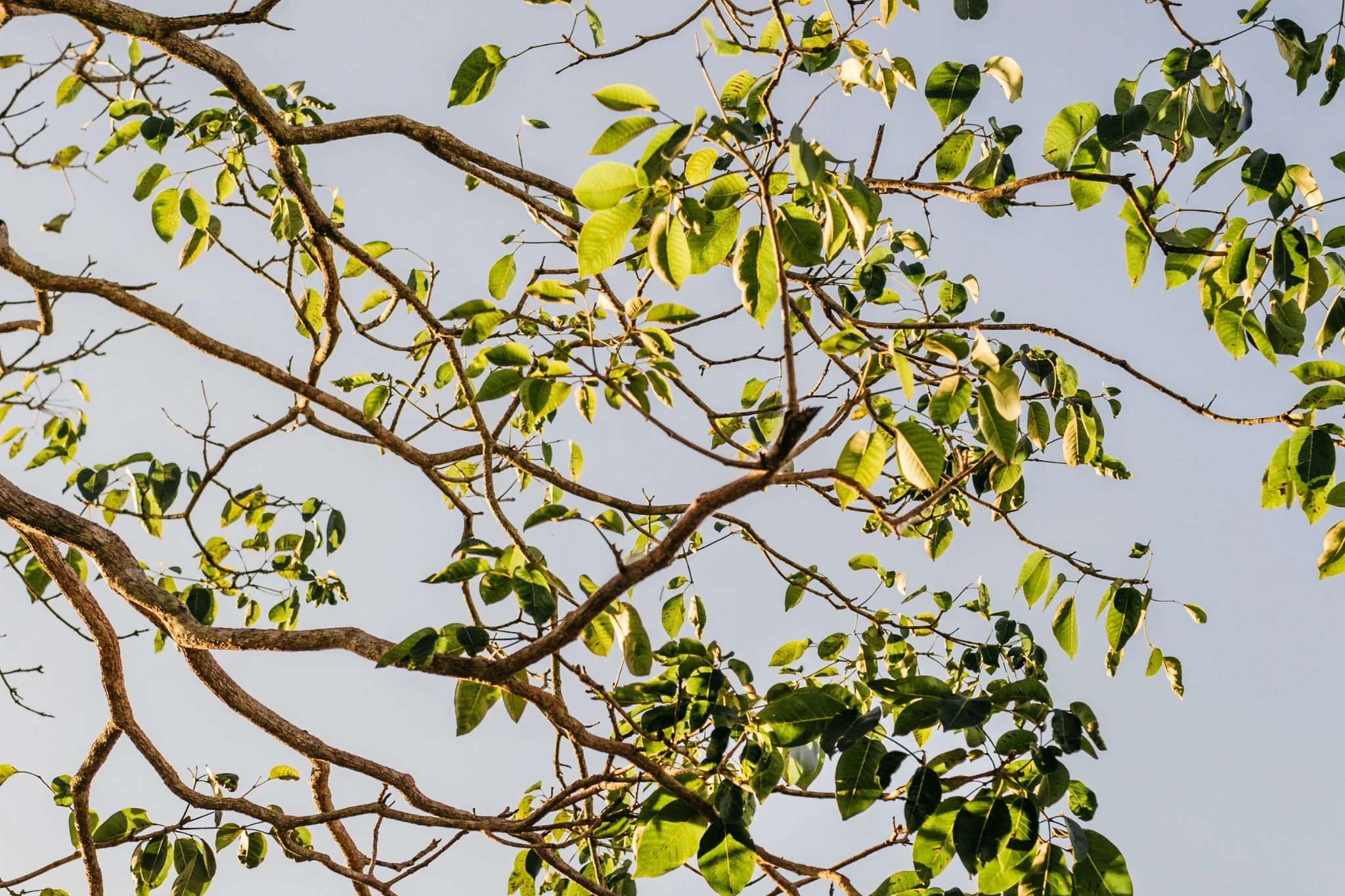
The idea that resonates most deeply with me is the one about the labels binding us. I experience something analogous to this constantly: when I say a “tree”, for example, the word carries assumptions in my mind that don’t reflect what’s actually occurring when I see, touch, or experience a specific tree. Because I don’t know with certainty what the tree is, and I find that not-knowing more honest, and somehow more alive, than any confident label I could use to denote to something that we’ve all agreed to call a “tree”.
“The tree which moves some to tears of joy is in the eyes of others only a green thing that stands in the way.”
When we’re taught “this is a tree”, the experience changes. It gets condensed and attributed to the container, whether we notice it or not. The tree becomes the label “tree”, homogenised into whatever a collective has agreed that word should mean. And still, each of us chooses, in our own way, what angle to take on what that label means.
The word applies to countless things at once, and our definition of what the tree is rests on the current knowledge of what that label is. Say "tree," and it reaches every tree there has ever been, the young ones, the ancient ones, the bare winter ones, the blooming ones. The word is the same in every case. So when someone tells you they stood beneath a tree this morning, you don't actually know what they saw. You have only a rough outline, an absence more than a presence.
We use language so we can make sense of the world, so we feel in control of our knowledge, have structure and ability to communicate with one another. But the label “tree” only operates on that one, limited level, useful for navigating and naming, but never holding the thing itself.
The label or name doesn’t really exist on its own. It only serves a purpose of denoting and pointing toward the referent, toward what’s actually at the heart of the thing. There, underneath the label, is experience.
We perceive the world as a collection of separate things because we attach a name and a form to everything. Words carry particular weight, since language helps us sort things into categories and experience them as distinct from one another. But when we stop naming and dividing things this way, those boundaries begin to dissolve. “This” and “that” no longer stand apart. We simply see everything as one whole.
“There is an art of seeing, seeing things as they are. When you look at a tree, do you translate it immediately into words and say, “tree”? Or do you look at it, perceive it, see the shape of it, see the beauty of the light on a leaf, see the quality of that tree? So there is an art of seeing things as they are, without naming, without being caught in the network of words, without the whole operation of thinking interfering with perception. That is a great art.”
To look this way is to see through the eyes of awareness, not simply the organ of sight bound to the conceptualising mind.
Building a door to meaning
The word is merely a token, a pointer toward the real thing that lies behind the appearance. It’s, therefore, a betrayal of the thing it points at, a limitation on the whole it’s trying to denote. The moment you say “joy” you have made a boundary around something that has no edges.
Labelling behaves the way a bucket behaves when you dip it into a running stream. For an instant you’re holding water. But the moment it’s inside the bucket, it has stopped being the stream. It’s just water now, which is still, contained, and going nowhere. That’s what a concept does to an experience, which is no longer in motion. Whatever reality is, it’s never still.
It’s always mid-change, always becoming something other than what it just was. A concept can only hold what has already stopped. The instant a word closes around an experience, the experience is no longer happening, it’s being encapsulated.
But this is what I find astonishing, sometimes words arrange themselves in a way that make the limitation disappear. It happens when the word creates enough of a resonance that the thing, which the words try to capture, move through the reader or hearer directly. When the word becomes transparent, and you can look through it instead of at it.
Poetry knows this. That’s why the greatest poets have always had a complicated relationship with the words, using them constantly, and constantly pointing beyond them.
Maybe that’s the real function of the words: instead of containing the meaning, create enough pressure or friction that the meaning breaks through the container. It’s as if the word ruptures: when you come across the metaphor and it makes something pass between two consciousnesses, yours and the author, that no word could have carried directly.
In using language, we walk toward an edge, the point where words wear thin enough to become almost transparent. It helps get to the core and recognise, when something in you is saying “yes, I always knew this”. And notice, it’s usually not the words that give you understanding, they just step aside at the right moment. What moves through you is something else entirely. The words do their job perfectly by disappearing.
The word is a finger pointing at the moon. The mistake is looking at the finger. But without the finger, where would you look?
Ideas fragment the vision, intuition, or experience of reality as a whole. The words can’t give us the experience of reality, they only indicate to it. We use them as pointers that orient us to get to reality. But once we get there, our concepts are useless.
That’s the whole mystery of it, isn’t it? We keep reaching for language to dissolve it. Using the finger to point at the moon. And occasionally, in those rare moments, the meaning gets through, and we feel it. Which means it was already in us, waiting. The word doesn’t put it there, it just creates the exact right moment, in the exact right shape.
“Believe it or not, every concept that was meant to help us get in touch with reality ends up by being a barrier to it, because sooner or later we forget that the words are not the thing. The concept is not the same as the reality. They’re different. If all you experience is your concept, you’re not experiencing reality, because reality is concrete. The concept is a help, to lead you to reality, but when you get there, you’ve got to intuit or experience it directly.”
That’s why I think what we’re creating as humans matters. When each of us knows how to make that shape or pointer to what’s real, would it be a poem, a song, or a painting, a design object, it’s the meaning with the right contours. The space where the observer suddenly finds themselves alone with something vast, familiar, and nameless.
Yet, the meaning stays just out of reach of the words, always beyond them. Words are only the conventional designations we apply to label objects, or states, or anything like that. Meaning is eternity, stillness – before time, beyond time.
Erasing the labels to find clean feeling
Words become labels the moment we stop letting them stay transparent – the moment they harden into fixed containers rather than passing pointers.
The mind reaches for a label to conserve resources (focus, time, processing power) for what it deems more urgent. Because of this, we often assume we understand or perceive something when we’re mostly engaging with our labels and the stories built around it.
Take the name “bird”. It’s a convenient invention, something humans agreed on so we could point to a certain feathered creature and be understood. Children, encountering the bird for the first time, has no such agreement standing between them and the creature. There’s just wonder, direct and unmediated by any story about what birds are supposed to be. Even so, the children aren’t experiencing raw reality either, as plenty of other perception filtering is still happening beneath the surface.
But we can also learn the name and all sorts of other stories about the bird, recognise these as stories, and know that reality is always more than and different from our stories, and live from curiosity, receptivity, and take in our sensory experiences of the bird, instead of letting the label stand in for the thing itself.
“The great Krishnamurti put it so well when he said, ‘The day you teach the child the name of the bird, the child will never see that bird again.’ How true! The first time the child sees that fluffy, alive, moving object, and you say to him, ‘Sparrow,’ then tomorrow when the child sees another fluffy, moving object similar to it he says, ‘Oh, sparrows. I’ve seen sparrows. I’m bored by sparrows.’ If you don’t look at things through your concepts, you’ll never be bored. Every single thing is unique. Every sparrow is unlike every other sparrow despite the similarities. It’s a great help to have similarities, so we can abstract, so that we can have a concept. It’s a great help, from the point of view of communication, education, science. But it’s also very misleading and a great hindrance to seeing this concrete individual.”
Inquiry helps us notice our mental representations (labels, assumptions, concepts, etc.) and see how they lay themselves over our senses. Once we can see them clearly, they become easier to set aside, freeing us to experience what’s present, as it is. Or rather, as it appears to us, which is already quite different from reality itself, since our senses are limited and our brain stitches together a version of things that simply makes sense to us. Noticing these mental representations opens up more receptivity, more room to explore and keep learning about whatever we’re encountering.
What labels do you have for yourself?
It isn’t only things and objects that get labeled, we do the same to ourselves. The moment we give a word to anything about ourselves, we cover over our authenticity with a definition.
It’s worth exploring what labels you’ve attributed to yourself, and either working to heal within them, or learning to detach from them altogether. Notice whether you’re clinging to the habit of having labels at all, like needing something fixed to call yourself.
Once a label becomes part of your identity, it becomes very difficult to let it go. We start to self-identify with it because it’s familiar, so it feels safe – and what feels safe, we feel bound to protect and keep intact.
We shape ourselves around what we’ve called ourselves or been named, and others build their expectations around those names. Roles, in this way, become traps. The path forward isn’t to refine or develop these characteristics further, but to grow awareness of them. When we strip the labels away, a clean feeling appears, uncontaminated by storyline. And from that clean feeling, knowing begins to unfold.
The more we define ourselves in fixed terms, the more we limit what we can become. People begin to relate to us based on those labels, and moving beyond them becomes difficult. Letting go of rigid definitions creates space. It gives access to something deeper, a direct sense of knowing that isn’t filtered through anyone’s expectations, including our own.
Instead, try to see yourself as you are: without judgment or evaluation, without reaction, without the weight of prejudice or opinion. Just see what you are, not to fix or change anything, simply observe yourself. Can you do that? When you find something that actually points to the deepest truth in you, it’s a remarkable and graceful moment.
You are not your story. You’re the one witnessing it unfold. The story was never the whole of you, what you are runs far past its edges.
No word could ever hold the full experience of your essence. Ask “who am I”, and a new name appears. Try to define it, and the meaning keeps slipping past the definition, just out of grasp. And still, somewhere underneath all that reaching, you already know. You’ve always known it. That act of remembering is homecoming.
Think of gold. Whether it’s shaped into a bar or melted into a ring, the gold itself never changes, only the form does. We name the form purely for convenience, but the substance underneath was never touched by what we called it. Your essence works the same way. There is only one “I”, and it's the same “I” in every person alive. But daily life needs more than that: we can’t simply call everyone “I” and expect to be understood, so each of us gets dressed in a different name. Strip all the names away, though, and only the one “I” remains – the same essence you already found, underneath every label you ever wore.
The observer who never changes
There’s a simple test for whether something is truly “I” or merely a label: does it change? The ego is in constant motion: moods shift, roles shift, and the story keeps rewriting itself. But the one watching all of this, the observer, doesn’t change with it. Every label you can think of belongs to the ego. None of it belongs to the true “I”. The moment you step back and simply observe yourself, you’re no longer fused with that separate egoistic self.
This is what we forget: we mistake the name for the only thing that’s real, and lose sight of what lies underneath it. The ego is really just a guard defending the body, mistaking itself for the master of the house. But it isn’t. The true master is the one “I” or “Self”, the same in everyone, and when the guard finally surrenders to that “Self”, the labels dissolve and the true state arises.
Which is why the deeper task was never to figure out who or what “I” is. You’ll never succeed, as there’re no words to interpret it. What’s actually required is simpler, and far harder: let the labels go, stop gripping your opinions so tightly. Authenticity isn’t something you chase down and catch. Release the labels, and the knowing is already waiting there.
The reality Behind the label
What if our labels are the biggest barrier to experiencing the wondrous reality we’ve found ourselves in?
Step outside the human vantage point for a moment, and you notice we’ve been living inside a bubble built entirely of labels and definitions we’ve laid over something real. That’s the reduction happening underneath all our understanding. Every mental image, every concept, takes something whole – the immense complexity of reality, the underlying oneness, – and compresses it into something small enough to hold in the mind. Useful, yes. But never the thing itself.
Labelling is our pathway into the physical realm itself. We name something in the first place because it “matters” to us, because naming is how we turn the flow of things into something we can finally grasp. It makes the world solid enough to hold and stable enough to stand on. And maybe that’s fine, maybe that was always the point of labels, to give us solid ground to stand on for a while.
But every so often, it’s possible to step back from that solid ground and return, for a moment, to how things were before they “mattered” to us, before we needed to grasp them at all. Not forever. Just long enough to remember that the ground was never the whole of it.
Rather than choosing more precise labels, remember, again and again, that they were never meant to be mistaken for the reality they’re pointing at.
“Are you imprisoned by your concepts? Do you want to break out of your prison? Then look; observe; spend hours observing. Watching what? Anything. The faces of people, the shapes of trees, a bird in flight, a pile of stones, watch the grass grow. Get in touch with things, look at them. Hopefully you will then break out of these rigid patterns we have all developed, out of what our thoughts and our words have imposed on us. Hopefully we will see. What will we see? This thing that we choose to call reality, whatever is beyond words and concepts.”
read more: